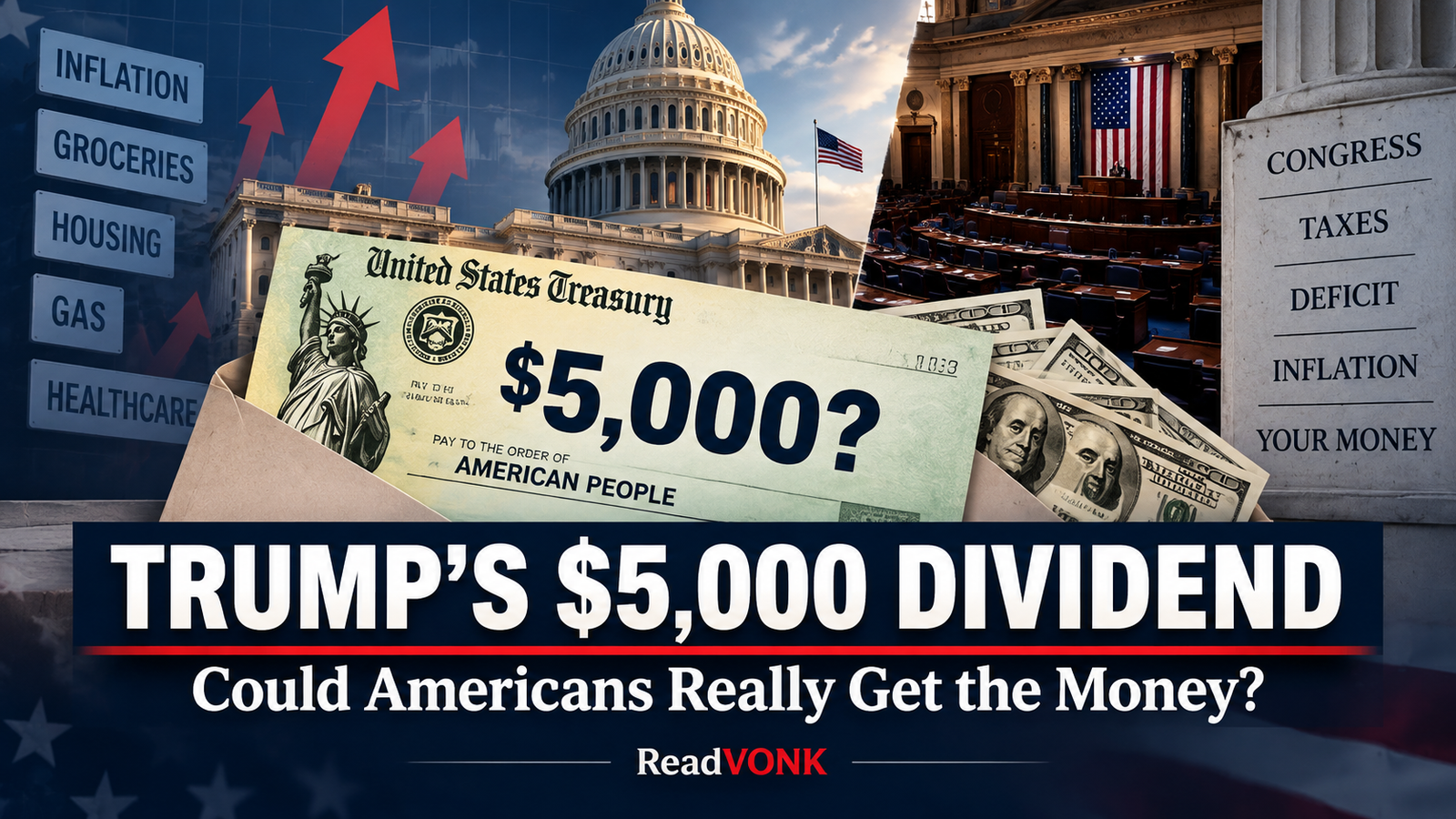
Donald Trump has given voters one of the most attention-grabbing promises of the 2026 midterms:
If Republicans keep control of Congress, he says Americans could receive a $5,000 “Trump dividend.”
The obvious question is also the most important one.
Could the government actually send everyone $5,000?
The answer is: not without Congress — and the economics would be complicated.
Trump cannot simply send the checks himself
The Constitution gives Congress control over federal spending.
That means Trump could propose the payments, campaign on them and pressure lawmakers to approve them.
But he cannot simply order more than a trillion dollars in checks to be mailed without congressional authorization.
AP estimates that a payment of $5,000 to every American adult could cost more than $1 trillion. Reuters puts the likely price around $1.2 trillion before additional interest costs.
That is why even some Republicans are skeptical.
Where would the money come from?
Trump has suggested tariff revenue could help finance the payments.
But tariff revenue alone would not cover a program of this size.
A $1.2 trillion payout would therefore require some combination of additional borrowing, spending cuts elsewhere or new federal revenue.
That creates another issue: inflation.
Injecting more than a trillion dollars into the economy could increase consumer demand at a time when voters are already worried about prices.
Some Republican lawmakers have openly warned that the proposal could make inflation worse.
Why Trump is making the promise now
The timing is political.
Affordability has become one of Republicans’ biggest vulnerabilities heading into November.
Trump’s approval on the economy has fallen, and Democrats have increasingly focused their campaigns on prices, healthcare and household costs.
The dividend changes the conversation.
Instead of defending the cost of living, Trump is promising voters cash.
That is an extremely easy message to understand.
Whether it is realistic is another question.
Could Congress approve a smaller version?
That is more plausible.
Congress has authorized direct payments before, including pandemic-era stimulus checks.
Lawmakers could theoretically create a narrower program with income limits, smaller payments or different eligibility requirements.
Vice President JD Vance has already suggested wealthier Americans might not qualify.
That means the eventual proposal — if one ever reaches Congress — could look very different from the blanket $5,000 promise.
The political gamble
Trump is effectively asking voters to believe that Republican control will put money directly into their bank accounts.
If voters believe him, the proposal could be powerful.
But it also creates an easy Democratic counterattack:
If Congress cannot afford it, why promise it?
And if Congress can afford more than $1 trillion in direct payments, why wait until after the election?
That debate could make the “Trump dividend” one of the most memorable economic fights of the final weeks of the campaign.
Sources
- AP — feasibility, estimated cost, congressional approval and economic concerns: https://apnews.com/article/trump-dividend-5000-payment-midterms-ab4111f78473e003a8146750b1971f9b
- AP — Trump’s Dallas announcement and details of the proposal: https://apnews.com/article/trump-dividend-5k-5000-check-republicans-cc80644e3168acd31c892129fb849436